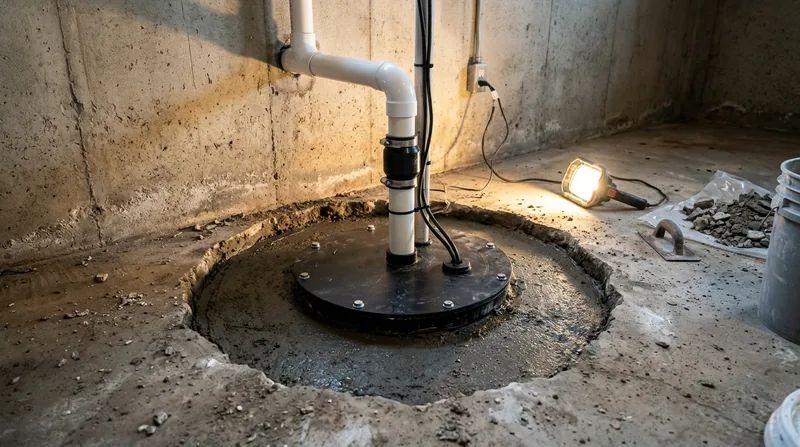




Greeley sits on heavy glacial clay soil over the South Platte and Cache la Poudre floodplains, and that clay is what makes a sump pump the hardest-working piece of equipment in a local basement. When the irrigation season ends and the water table rises, or when spring snowmelt and summer thunderstorms dump water against the foundation, the soil swells, the slab heaves, and water finds the low corner of every 1900s bungalow near Union Colony and every 1990s poured basement up on the north edge. Sump Pump Installation & Replacement in Greeley is the work we do most: new sump pits, properly sized pumps, sealed basins, check valves, and discharge routing that survives a hard freeze instead of splitting on the first January night. If your pump is cycling constantly, humming without moving water, or your basin is dry while the floor is wet, the pump is not the whole story. We read the whole below-grade picture, and we tell you plainly whether you need a pump, a basin, or interior drain tile feeding that basin.
Why Sump Pump Failure Hits Greeley Basements Harder Than Most
Most Greeley homes were not built with a sump in mind. The brick and frame bungalows around Downtown and the older west side have stone or early block walls and shallow cellars, while the 1950s to 1970s ranches in Lincoln Park have partly finished basements with no perimeter drainage at all. The subdivisions built from the 1990s onward on the north and east edges do have poured walls and sometimes a factory basin, but the builder-grade pump in that basin is usually a 1/3 HP unit rated for a cleaner pit than a clay-soil house produces.
What actually kills these pumps here is not age. It is the cycle: dry clay shrinks and opens cracks, wet clay swells and drives hydrostatic pressure against the wall and under the slab, and the pump runs hard for two weeks in June and then sits idle for months. Add deep frost and freeze-thaw cycles working on the discharge line, and you get the failure modes we see on call after call.
- The pump burns out because the basin fills with clay fines and the float jams in the grit.
- The discharge line freezes at the exterior wall penetration and the pump deadheads against ice.
- The check valve fails and every cycle dumps the standing water in the line right back into the basin.
- The basin was never sealed, so soil gas and humid air move freely into the basement and feed efflorescence on the walls.
- The pump is undersized for the volume a thunderstorm delivers, and it loses the race against the water table.
A pump that is correctly sized, set in a sealed basin, and plumbed with a freeze-protected discharge does not need to be rescued every spring.
Key info: In a 1950s ranch off 10th Street in Greeley, we pulled a jammed 1/3 HP pump out of a basin half full of clay silt, cut the basin deeper, set a 1/2 HP cast-iron pump on a solid base, and reran the discharge through the rim joist to a daylight outlet. The homeowner had been bailing that corner by hand every July for six years.
If you want the code and permit side verified before work starts, the City of Greeley building department is the authority on what your discharge and drainage work requires.
How We Install or Replace a Sump Pump in a Greeley Basement
We start by finding out where the water is actually coming from, because a new pump in the wrong spot just moves the problem. We check the wall joints for seepage, look for efflorescence and tide lines, test the existing basin for silt depth, and trace the discharge line to its outlet. If the water is entering across the whole perimeter, the pump needs a collector, not just a pit.
- We cut and break out the floor at the low corner and dig the pit to depth, wide enough that the pump does not short-cycle.
- We set a perforated or slotted basin, line the excavation with filter fabric and washed gravel so clay fines stay out of the pit.
- We tie the interior perimeter drain into the basin where the walls are wet, so water reaches the pump instead of pooling at the footing.
- We set the pump on a solid base, install a check valve above the lid, and seal the basin lid with a gasketed, bolted cover.
- We run the discharge line with a freeze-protected route, a proper slope, and a termination that dumps well away from the foundation.
- We fill the basin with water and cycle the pump several times to confirm the float setting, the check valve, and the flow before we close up.
Every install ends with a wet test, not a verbal promise, and we leave the pit clean enough that you can pull the lid and see the pump working.
Local example: A split-level in the Kelly Farm area of east Greeley had a builder basin that filled every time the ditch flow rose in late spring. We kept the pit, replaced the pump with a 1/2 HP unit, added a battery backup, and reran the discharge to a pop-up emitter at the grade break. The next June storm, the basin cycled and the floor stayed dry.
When the walls themselves are the source, the pump is only half the fix, and foundation crack repair closes the entry point that feeds the pit.
Sump Pump Approaches We Use in Greeley Homes
Not every basement needs the same rig. A shallow 1920s cellar with a stone wall behaves differently from a 2005 poured basement with a factory pit, and the pump, basin, and discharge have to match the house. Here is how we match the approach to the building stock.
| Approach | Description | Best for |
|---|---|---|
| New sump pit and pump | Cut and break the floor, dig a properly sized pit, set a sealed basin, pump, check valve, and discharge line. | Older Greeley homes with no existing basin and a wet low corner. |
| Pump replacement only | Pull the old pump, clean the pit, set a correctly sized cast-iron pump and a new check valve. | A sound basin with a burned-out or undersized builder pump. |
| Basin rebuild and reseal | Deepen the pit, add filter fabric and gravel, install a gasketed bolted lid over the basin. | Silt-choked pits and unsealed basins letting humid air into the basement. |
| Pump plus interior drain tie-in | Run interior perimeter drain to the basin so wall seepage and footing water reach the pump. | Perimeter seepage and hydrostatic pressure, not just one wet spot. |
| Discharge line correction | Reroute a freezing or short-cycling discharge with proper slope, check valve, and a distant outlet. | Pumps that deadhead against ice or dump water back at the wall. |
The right combination depends on where the water enters, and a free inspection settles that question before anyone quotes a number.
Sump Pump Installation & Replacement Cost in Greeley: What to Expect
Most sump work in Greeley starts at From $1,200 for a straightforward pump replacement in a sound basin, and climbs from there as the pit, the discharge route, and the drainage tie-in get more involved. The number that matters is not the pump on the shelf. It is the pit depth, whether the floor has to be cut, how far the discharge has to run, and whether the basin needs a rebuild.
A full new pit in a 1920s bungalow with a shallow cellar costs more than a pump swap in a 2005 subdivision, because we are breaking older concrete and working around stone or block walls. A discharge line that has to cross a finished ceiling or reach a daylight outlet across a long side yard adds labor. A battery backup is a separate line item, and we quote it honestly rather than bundling it into a figure you cannot read.
Get two or three estimates and compare what is actually included: pump horsepower and material, basin size, check valve, lid sealing, and the discharge termination. A low bid that reuses a silted pit and a plastic pump is not the same job. Our full breakdown lives on the pricing page.
Finding a Sump Pump Installer Near Me in the Greeley Area
Hiring for below-grade work near Greeley means asking questions that a general handyman cannot answer. Sump discharge that ties into drainage or the sanitary connection can require a permit, and the rules vary by jurisdiction, so confirm with the local building department before work begins. A dedicated waterproofing contractor reads the whole foundation, not just the pit.
- Confirm the contractor is licensed and insured, and ask for the certificate before work starts.
- Get at least two written estimates that itemize the pump, basin, valve, and discharge separately.
- Ask for local references from Greeley or Evans jobs and call them.
- Ask who pulls the permit if the discharge or drainage work requires one.
- Check any HOA requirements for exterior discharge outlets and grade changes before scheduling.
A contractor who cannot answer those five questions plainly is not the one to trust with your basement. Reach us through the contact page and we will walk the basement with you.
Sump Pump Installation & Replacement in Greeley: Pricing Guide
| Service | Price | Details |
|---|---|---|
| Pump replacement in existing basin | Starting at $1,200 | Includes new cast-iron pump, check valve, pit cleaning, and wet test of the cycle. |
| New sump pit and pump installation | Starting at $2,400 | Floor cut, pit excavation, sealed basin, pump, and discharge line, priced by depth and access. |
| Basin rebuild and reseal | Starting at $1,600 | Deepened pit, filter fabric and gravel, gasketed bolted lid, priced by silt depth and lid size. |
| Discharge line correction | Starting at $850 | Reroute of a freezing or short-cycling line, priced by run length and outlet location. |
| Complex or large-scale job | On estimate | Perimeter drain tie-ins and multi-pump setups need an on-site look before a number is given. |
| Estimate | Free | Response within 24h at (970) 373-0145, no obligation to book. |
Indicative pricing, the exact cost depends on square footage, finish, and site access. Free personalized estimate within 24h at (970) 373-0145.


